Common questions
What is an MVP in app development?
What is an MVP? It's a first version with only what you need to learn if people will use it. Here's what it means, what it isn't, and how to choose yours.
Published
If you're planning an app or an online service, someone has probably told you to “start with an MVP”. It sounds like jargon, but the idea is simple, and it can stop you from spending months on features nobody uses.
Here's what an MVP is, what it isn't, and how to work out what should go in yours.
The short answer
MVP stands for minimum viable product. It's the first version of a new product, built with only what you need to find out whether people will actually use it, or pay for it. It works the same way for websites, web apps and phone apps.
The idea comes from Lean Startup. Eric Ries describes an MVP as the version of a new product that lets a team learn the most about its customers with the least effort.
So the point of an MVP isn't to launch something small. It's to learn something real.
What “minimum” and “viable” mean
- Minimum: only the features you need to test your idea. Everything else waits.
- Viable: it has to actually work. Real customers should be able to use it without running into broken buttons.
Both halves matter. The Agile Alliance lists a common mistake: teams focus on the minimum part and forget the viable part. If the product doesn't work well enough, you can't tell whether people didn't want it or just couldn't use it.
An everyday example
Think of a pop-up shop. Before signing a lease on a full shop, you open a small stall and see whether people actually buy.
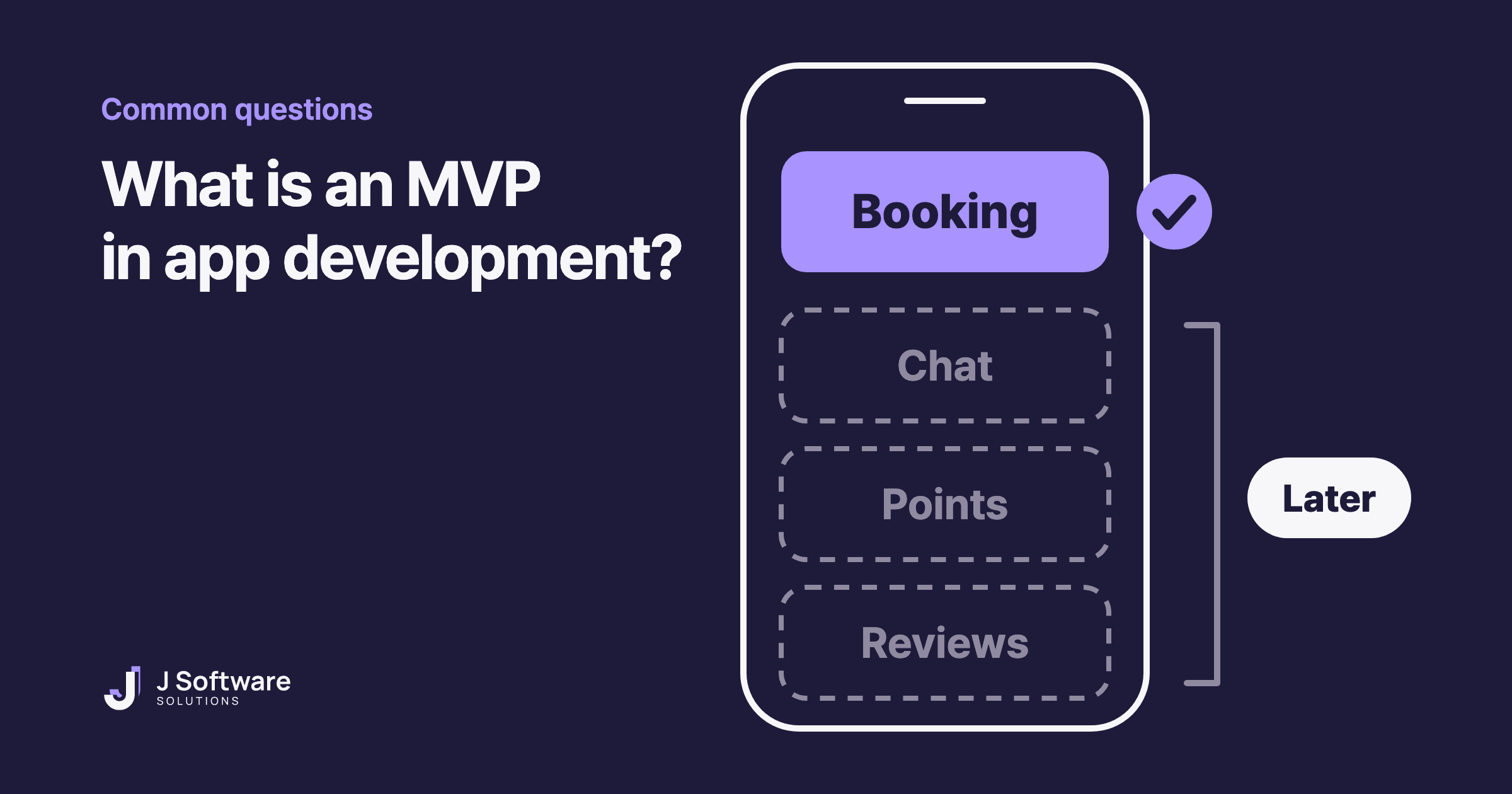
An app can work the same way. Say you're planning a booking app for your studio, with booking, chat, loyalty points and reviews. Your MVP might be booking only, built properly, so real customers can book real sessions. Chat, points and reviews wait until you know people use it.
Watching what people do tells you more than asking them. The Agile Alliance notes that seeing what people actually do is much more reliable than asking what they would do.
What an MVP is not
- Not a rough prototype. It's small, but it should work properly for the people who use it.
- Not the finished product. It's a starting point. A common mistake is launching an MVP and then never changing it, whatever customers say.
- Not always an app. Sometimes the first test is no more than a landing page: one page that explains the idea and lets people sign up or get in touch.
How to decide what goes in your MVP
- Write down every feature you'd like your product to have.
- Decide what you most need to find out. Will people book? Will they pay? Will they come back?
- Circle the features you can't find that out without. Keep that list as short as you can.
- Move everything else to a “later” list. It's not cancelled, just not first.
There's no single right answer. Ries himself says it takes judgment to work out what MVP makes sense for each situation.
After launch: build, measure, learn
An MVP is the first turn of a loop. Lean Startup calls it the build-measure-learn feedback loop: build something, measure how people use it, learn from it, then decide what to change or add next.
Measure what people do, not just what they say. How many people booked? How many came back? Those answers tell you what to build next.
Then improve the product, add the next most important feature, and check again.
Our honest take
An MVP isn't about building fast and cutting corners. It's about building the right thing first, and building it properly. That's how we like to work too: understand the business, agree on what matters most, then build it well.
Not sure you need an app at all? Start with Should my business have an app, or is a website enough? Planning a booking system or customer portal? See our web applications service.